


_7.jpg)
Key Takeaways
Build your rent estimate from several comparable rental properties, using both active listings and recently leased homes when available.
Give recently leased properties more weight than asking prices because they provide a better indication of what the market has supported.
Adjust comparable properties for differences such as size, condition, parking, appliances, and updates.
If you're asking, “How much can I rent my house for in Lynchburg?” The first number you find online is rarely the whole answer. Citywide rental averages combine different property types, sizes, conditions, and features, which can make them less useful for pricing a specific home.
KRS Lynchburg works with homeowners who need a rental price they can support with local market data. The process starts by gathering comparable rentals in Lynchburg, making reasonable adjustments, and using those findings to establish a realistic rent range.
Start With Rental Comps in Lynchburg
A rental comp is a property that is similar to yours and is either currently listed for rent or has recently leased.
Look for several comparable properties and focus on factors such as:
Number of bedrooms and bathrooms.
Approximate square footage.
Property type.
Condition.
Parking.
Appliances and other features.
General location within the market.
The closer the properties are to yours in overall characteristics, the more useful they are when estimating rent. Owners can also review KRS Lynchburg’s guide to pricing a Lynchburg home to rent for additional context on comparable properties and market-based pricing.
Check Active Listings
Search major rental listing platforms for properties similar to yours. Record the asking rent, property features, and how long each listing has been available.

Active listings show what other property owners are currently asking, but they do not necessarily show what renters are willing to pay. A property that remains available for an extended period may indicate that the asking rent or overall value proposition should be reviewed.
For that reason, treat active listings as one part of the pricing picture and use comparable rental properties to help support your final estimate.
Find Recently Leased Homes
Recently leased properties can provide stronger evidence of what the market has supported.
When possible, compare properties that closely match yours in size, condition, and features. Keep notes or screenshots so you can evaluate how your property compares.
KRS Lynchburg also offers a rental price analysis for owners who want help evaluating comparable properties and local market conditions.
Adjust for Condition and Amenities
No comparable property will match your rental exactly, so account for meaningful differences.
Consider features such as:
Kitchen and bathroom condition.
Garage or off-street parking.
Dishwasher and laundry connections.
Flooring and paint.
Central heating and air conditioning.
Outdoor space.
Overall property condition.
Rather than assigning a fixed dollar amount to every feature, use the full set of comparable properties to determine how much each difference appears to influence rent.
Condition matters as well. A clean, well-maintained, rent-ready property may attract stronger interest than a similar property that still needs repairs or updates.
Consider Current Lynchburg Rental Market Conditions
Rental demand can change throughout the year and from one market cycle to another.
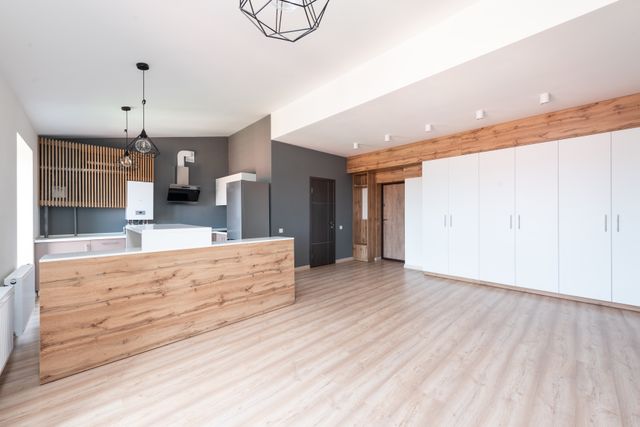
Before setting rent, look at how quickly comparable properties are leasing, how many similar rentals are currently available, and whether asking prices appear to be rising, falling, or remaining stable.
These factors can help you decide whether to price near the upper or lower end of your estimated range.
A Sample Rent Estimate for Lynchburg
The following numbers are hypothetical and are included only to demonstrate the process.
Suppose your property in Lynchburg has three bedrooms, two bathrooms, approximately 1,400 square feet, a garage, an older kitchen, and no dishwasher. The property is otherwise rent-ready.
Comp 1 — Listed at $1,550: Updated kitchen and dishwasher. After accounting for those differences, you may value it closer to $1,450 as a comparison.
Comp 2 — Listed at $1,375: No garage. After adjusting for parking differences, you may consider it closer to $1,425.
Comp 3 — Recently leased at $1,450: Very similar in size, condition, and features. Little or no adjustment may be needed.
Comp 4 — Recently leased at $1,300: Smaller and without a garage. After adjusting for those differences, you may consider it closer to $1,375.
Taken together, these properties might suggest an estimated rent range of approximately $1,375 to $1,450.

The goal is not to force every comparable property into an exact formula. Instead, use them collectively to determine a reasonable range that reflects the home's size, features, condition, and current market competition.
Turn the Estimate Into a Rent Range
Once you have reviewed your comparable properties, turn the data into a practical pricing range instead of relying on a single number. Establish:
A target asking rent.
A lower end of the acceptable range.
A date to review performance.
Clear signs that would justify a pricing adjustment.
Your target rent should be supported by the most relevant comparable properties, with a lower fallback point if the market response is weaker than expected.
If interest is limited, review the price, photos, condition, and overall presentation. Set a review date so you can reassess based on actual market response. Competitive pricing is also an important part of reducing rental vacancy.
Avoid holding onto an asking price that is difficult to support with local market data. HUD’s Fair Market Rents can provide a useful benchmark alongside comparable rental properties. A well-defined range makes it easier to adjust strategically while still protecting the property's income potential.
Bottom Line
A strong rent estimate starts with relevant comparable properties, followed by reasonable adjustments for differences in size, condition, features, and current market conditions.
Relying on broad averages alone can lead to overpricing or underpricing. A property that is priced too high may remain vacant longer, while a property priced too low may generate less income than the market could support.
Professional property management can help owners evaluate local rental data, monitor market conditions, and set pricing based on property-specific factors rather than broad averages.
KRS Lynchburg can help property owners determine a competitive rent range and make informed leasing decisions. Call 434-608-9180 to request a rental price analysis.
See What People Are Saying About Us!
Frequently Asked Questions
Should I Price Above the Comps and Lower It Later?
Pricing substantially above comparable rentals can reduce early interest and extend vacancy.
If you want to test the upper end of your estimated range, keep the asking rent supported by comparable properties and set a date to review performance. If inquiries and showings remain limited, reassess the price rather than allowing the property to remain overpriced for an extended period.
Why Does an Online Rent Estimate Differ From My Comps?
Online rent estimates rely on broad data sets and automated calculations. They may not fully account for differences in property condition, renovations, parking, appliances, layout, or other features.
Comparable rentals provide a more focused view because they allow you to evaluate properties that closely resemble yours.
Online estimates can still serve as a general reference point, but they should not replace a property-specific rental analysis.
Is a Lower Rent Better Than a Vacant Month?
In some cases, accepting slightly less rent can produce a better financial result than holding out for a higher price while the property remains vacant.
For example, reducing rent by $50 per month results in $600 less income over a 12-month lease. By comparison, one vacant month on a property renting for $1,425 represents $1,425 in lost rental income before accounting for other ongoing property expenses.
That does not mean owners should automatically lower the rent. Instead, compare the potential cost of vacancy with the income difference between your current asking rent and a more competitive price.
When Should I Revisit My Rent?
Review the rental rate before marketing a vacant property and before making renewal decisions.
Use fresh comparable properties each time rather than relying on old pricing data. Market conditions, competing inventory, and property improvements can all affect the appropriate rent.
Keeping notes from previous rental analyses can also make future reviews easier.
Can I Use Lynchburg Comps for a House in Forest or Madison Heights?
Lynchburg rental data may provide general context, but properties in surrounding communities should be compared first with rentals in their own local market.
Forest is in Bedford County, while Madison Heights is in Amherst County. Differences in location, property type, lot size, supply, and local demand can affect rental pricing.
If comparable properties are limited, expand the search gradually to nearby areas with similar characteristics and use a wider rent range to account for the added uncertainty.